
Meibomian Gland Dysfunction (MGD) is a chronic, diffuse abnormality of the eyelid’s sebaceous glands, characterized by terminal duct obstruction and altered lipid secretions (Nelson et al., 2011). This leads to an unstable tear film, triggering evaporative dry eye disease. MGD shares a complex, overlapping relationship with posterior blepharitis; the gland blockages cultivate bacterial proliferation and eyelid inflammation, while active blepharitis promotes progressive glandular hyperkeratinisation and obstruction.
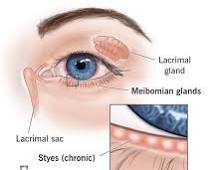
According to international consensus guidelines established by the International Workshop on MGD, clinical severity is categorized into staging grades 1 through 4 (Geerling et al., 2011). Grade 1 presents with subclinical, mild signs and no clear dry eye symptoms, whereas Grades 2 to 4 reflect escalating disease severity characterized by severe clinical signs, thickened or toothpaste-like meibum, extensive gland dropout, and chronic corneal damage.
According to international consensus guidelines established by the International Workshop on MGD, clinical severity is categorized into staging grades 1 through 4 (Geerling et al., 2011). Grade 1 presents with subclinical, mild signs and no clear dry eye symptoms, whereas Grades 2 to 4 reflect escalating disease severity characterized by severe clinical signs, thickened or toothpaste-like meibum, extensive gland dropout, and chronic corneal damage.
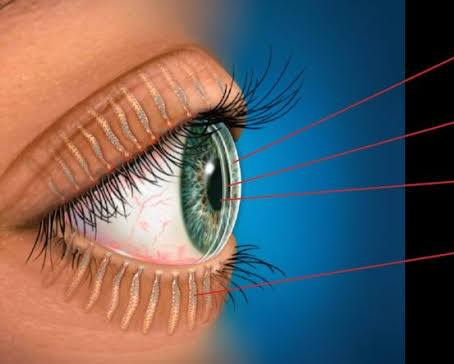
MGD is categorized into four distinct severity grades: [1]
- Grade 1: Subclinical with minimal plugging and clear meibum; patient is asymptomatic.
- Grade 2: Mild-to-moderate plugging with cloudy or thickened meibum and intermittent symptoms.
- Grade 3: Significant orifice obstruction, lid irregularity, and thick or milky meibum causing constant irritation.
- Grade 4: Severe gland drop-out, toothpaste-like inspissated meibum, extensive corneal staining, and chronic pain.
Why At-Home Lid Expression Isn’t Enough for High-Grade Meibomian Gland Dysfunction
Management scales dynamically based on these grades. Initial conservative treatment centers on consistent patient-led lid hygiene, including daily warm compresses to liquefy solidifying oils, followed immediately by targeted eyelid massage (Jones et al., 2017). However, standard self-expression and home physical therapies face strict physiological limitations when the disease advances. Once a patient reaches moderate-to-severe stages (Grade 3 or 4), severe meibum stagnation, profound hyperkeratinisation of the ductal epithelium, and concrete glandular blockages occur (Abbott, 2024). At these advanced grades, manual at-home expression lacks the necessary sustained heat and targeted pressure required to overcome extreme meibum viscosity, rendering home care palliative rather than curative and creating a clear clinical necessity for specialized, in-office intervention (Jones et al., 2017).
If symptoms persist or progress, advanced clinical intervention involves treatment with drugs. Topical or oral antibiotics, such as azithromycin or doxycycline, are utilized alongside low-dose anti-inflammatory drops like cyclosporine to systematically lower the ocular bacterial load and downregulate persistent surface inflammation (Geerling et al., 2011).
The Critical Role of Gland Expression After IPL Therapy for Chronic MGD and Blepharitis
For severe or refractory cases, modern clinical practice increasingly relies on advanced office-based therapies like Intense Pulsed Light (IPL). Polychromatic light pulses safely target and thrombosis abnormal telangiectatic blood vessels, effectively shutting down the pathways delivering inflammatory cytokines to the eyelid margins (Arita et al., 2018). Crucially, IPL must be paired with mechanical meibomian gland expression (MGX). While the thermal energy of IPL softens and unplugs deeply hardened lipids, it is the manual force of clinical expression that completely clears out the stagnant meibum. Academic trials confirm that skipping this immediate extraction step significantly limits therapeutic recovery, whereas combined expression ensures long-term tear film stability and profound symptomatic relief (Liu et al., 2022).
In-Clinic Solutions: IPL and Mechanical Expression
Advanced MGD requires clinical intervention combining Intense Pulsed Light (IPL) therapy with meibomian gland expression (MGX). [1, 2]
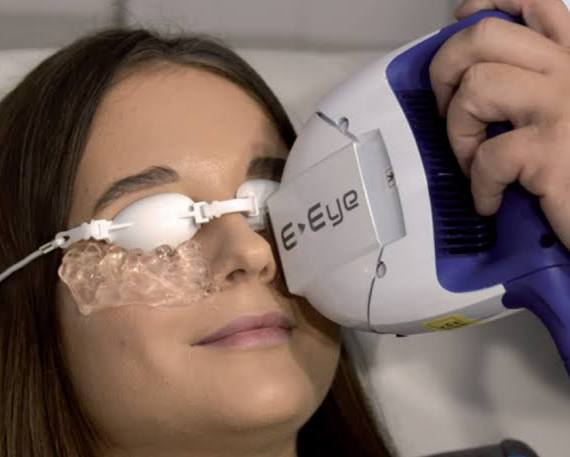
- IPL Mechanism: Polychromatic light pulses target and coagulate abnormal telangiectatic vessels along the lid margin—cutting off inflammatory cytokine delivery—while safely warming the tarsal plate from the outside in. [1, 2, 3]
- Post-IPL MGX: Performing immediate in-clinic mechanical expression leverages the thermal softening from IPL to physically clear stagnant plugs using specialized paddles or forceps, restoring healthy lipid flow and tear film stability. [1, 2, 3, 4]
Frequently Asked Questions
Is IPL treatment for Meibomian Gland Dysfunction comfortable?
Most patients tolerate the procedure very well and describe the sensation as a light, warm flick or snap against the skin, similar to a rubber band. Protective ocular shields or patches are applied over your eyes before the session begins. A cooling gel is also applied to the skin to ensure maximum comfort and protect the delicate tissue around the eyelids throughout the treatment.
What should I expect during recovery after an IPL and expression session?
There is virtually no downtime following the procedure, allowing you to return to your normal daily routine immediately. You may experience mild redness, a slight warming sensation, or a transient gritty feeling in the eyes for a few hours post-treatment; these are completely normal signs that the glands are starting to clear. Because your skin will be temporarily photosensitive, it is essential to wear broad-spectrum sunscreen and avoid direct sun exposure for at least 48 hours.
Why can’t I just express my eyelids at home if they feel blocked?
When MGD progresses to severe grades (Grades 3 and 4), the oils inside the glands harden into a thick, toothpaste-like consistency. Attempting to forcefully squeeze your own eyelids at home to clear these hardened plugs can cause accidental corneal abrasions, bruise the delicate eyelid tissue, or permanently damage the internal structure of the glands. Safe clearance requires the precise, therapeutic thermal energy of IPL to liquefy the blockage first, followed by controlled clinical instruments used by an eye care professional.
How much does in-clinic IPL and meibomian gland expression cost?
The cost of IPL therapy varies depending on your geographic location, the clinic, and the severity of your condition. On average, individual sessions range from £300 to £400. Because managing chronic MGD successfully typically requires an initial series of 3 to 4 treatments spaced a few weeks apart, many clinics offer comprehensive package pricing to make the overall treatment plan more affordable. These range from £950 to £1200 for a series of 4 sessions.
Salman Siddiqui is a specialist Optometrist providing dry eye treatments to patients in the NHS and privately. You can find him for private treatment at Oculase Private Eye Clinic London and Feltham Eyecare Centre